
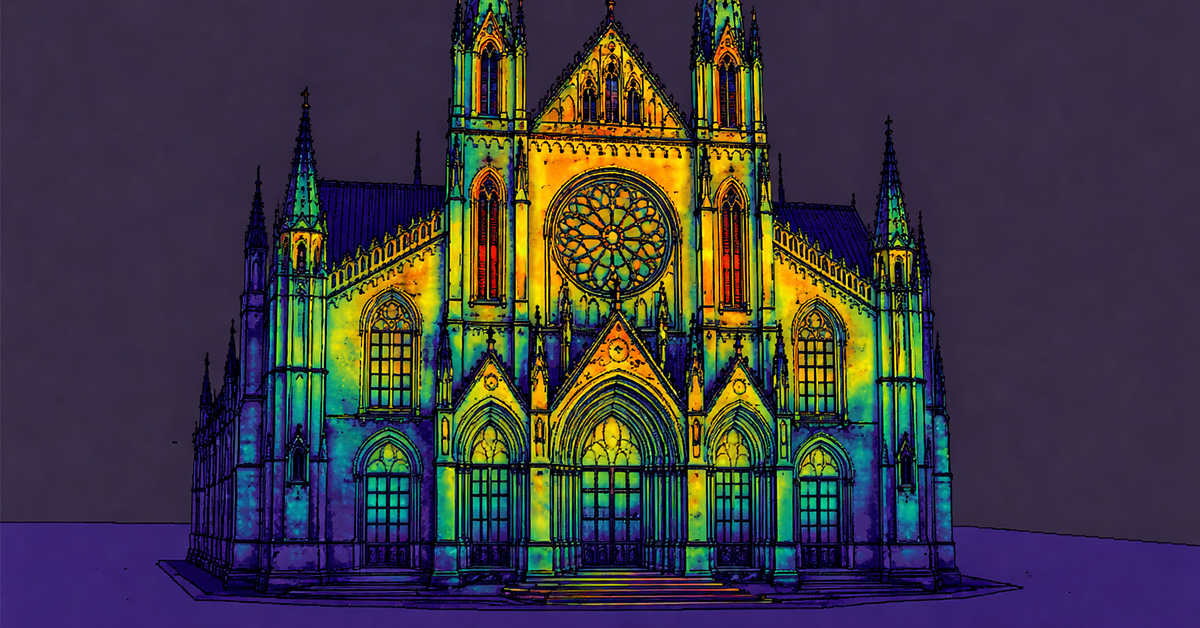
How to Light Tall Buildings: Strategic Luminaire Positioning for Monumental Architecture
Luminaire Positioning Strategies for Lighting Outdoor Tall Buildings
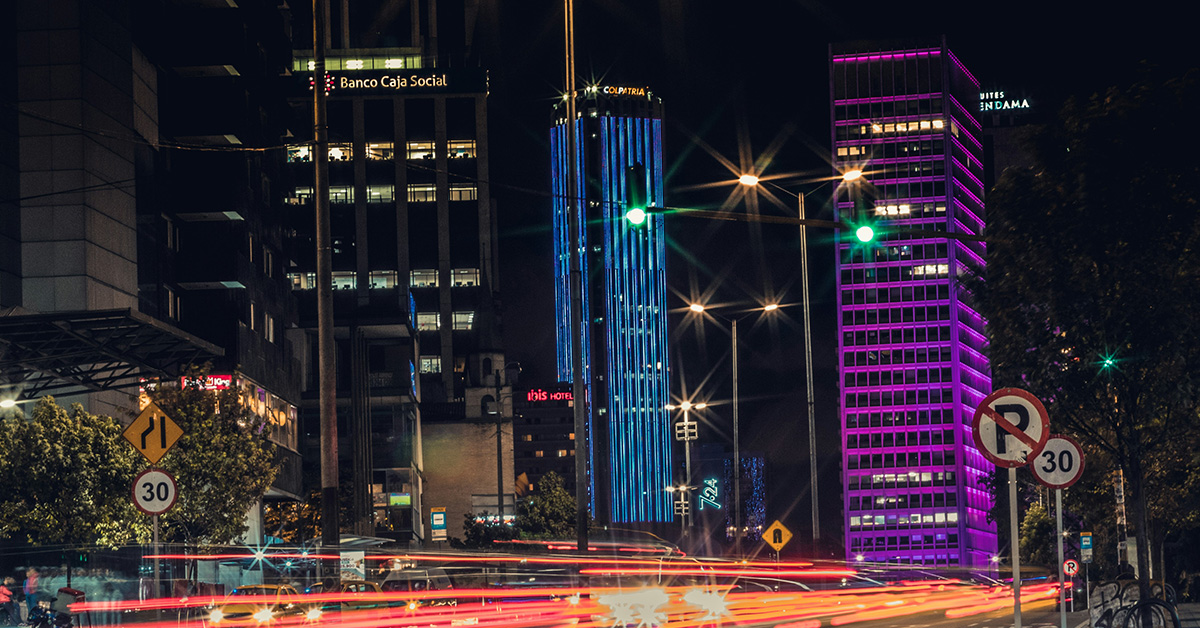
Architectural lighting for tall buildings is not only about choosing powerful luminaires—it is fundamentally about where and how those luminaires are positioned. Tall building lighting is not limited to monumental landmarks. In modern cities, lighting design must address a wide range of architectural types, including:
• Landmarks, monuments, and observation towers
• High-rise office buildings
• Hotels and mixed-use developments
• Residential towers
• Cultural and civic buildings
For these outdoor lighting applications, professional lighting design typically considers three primary luminaire positions:
• Mounted on the building (low or integrated positions)
• Mounted on poles or street infrastructure
• Mounted on distant or neighboring structures
Each position plays a different role in achieving a balanced and effective lighting result.
Why Luminaire Positioning Matters
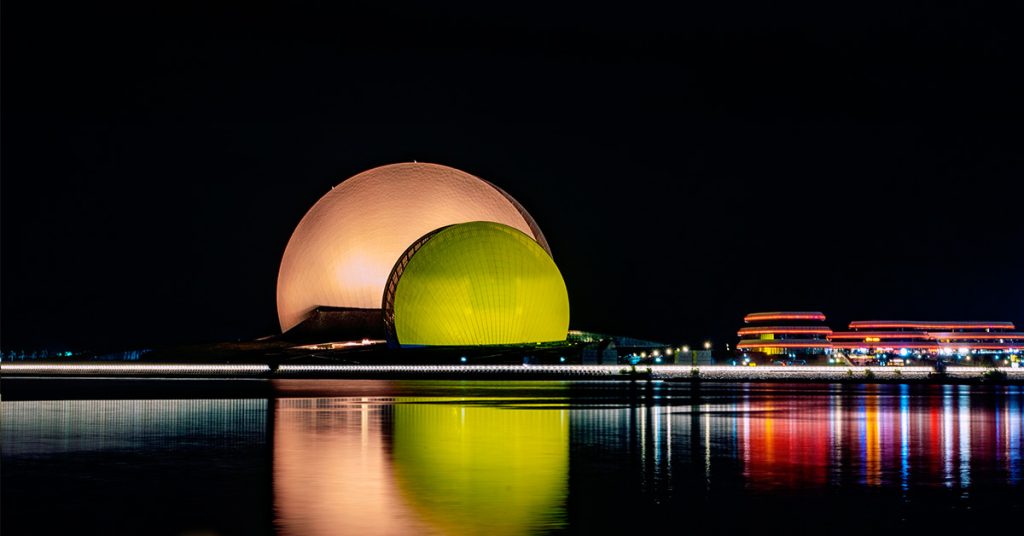
For large-scale buildings, positioning directly affects:
• Light uniformity across height
• Shadow behavior and façade texture
• Glare and spill light control
• Overall visual hierarchy
In outdoor architectural lighting projects, the relationship between distance, angle, and beam distribution determines the final result:
• Close positioning → strong texture and contrast
• Medium distance → balanced and uniform lighting
• Long distance → full-height coverage and visual consistency
Vertical illumination plays a dominant role in perception, as illuminated façades significantly enhance brightness and spatial understanding. Professional lighting practice shows that distance and angle determine whether light reveals texture, creates uniformity, or reaches extreme heights.
Position 1: Luminaires Mounted on the Building (Base or Low Façade)
Typical Products
• Linear wallwashers
• Compact floodlights / spotlights
Definition
This includes luminaires installed:
• Directly on the façade
• At the base of the building
• On low architectural elements close to the ground
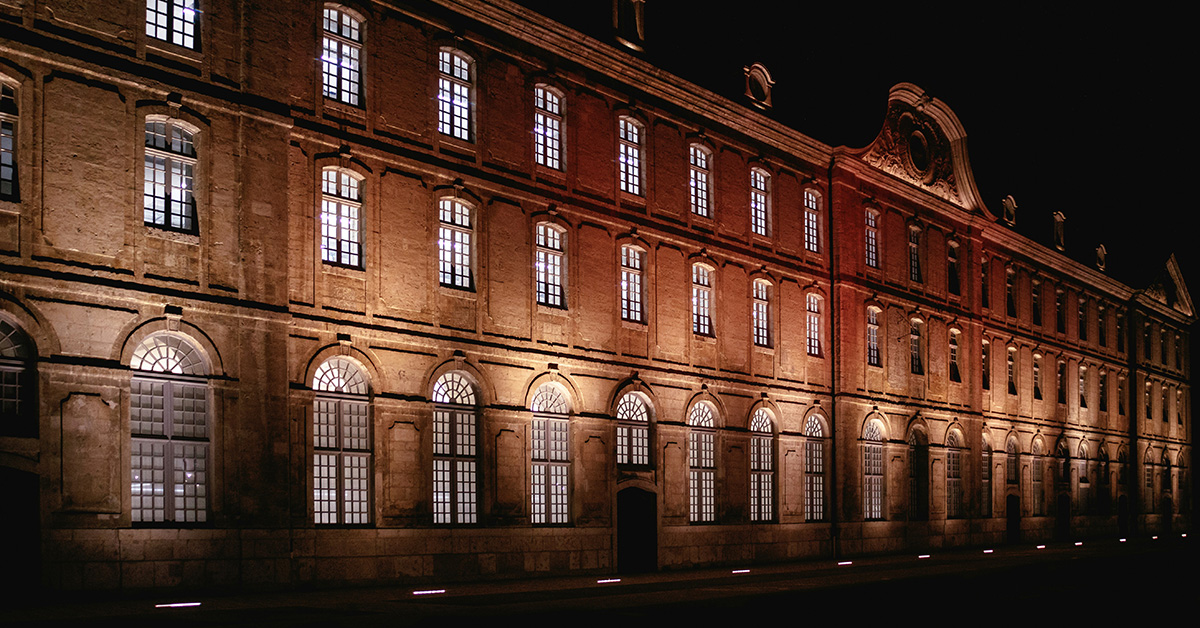
Lighting Effect: Grazing & Vertical Emphasis
Key Characteristics
• Creates strong contrasts of light and shadow
• Enhances material texture and surface depth
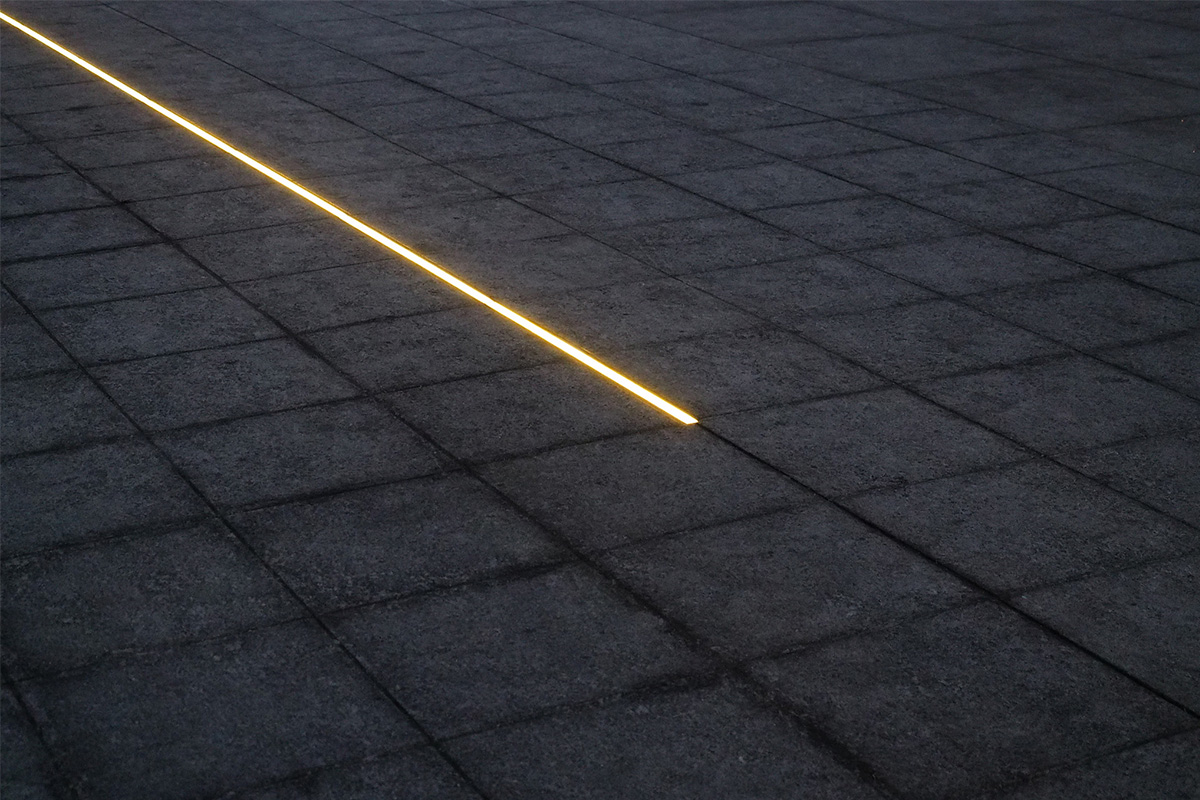
• Ideal for lower façade zones (typically up to ~6m effectively). For better control, many designers prefer using adjustable inground lights to fine-tune the beam angle.
Limitations
• Cannot evenly illuminate tall structures alone
• Upper façade quickly loses brightness
• Requires precise aiming and beam control
Position 2: Luminaires on Poles or Street-Level Structures
Typical Products
• Floodlights
• Asymmetric wallwashers
• LED projectors
Definition
Luminaires mounted on:
• Street light poles
• Landscape poles
• Urban infrastructure around the building
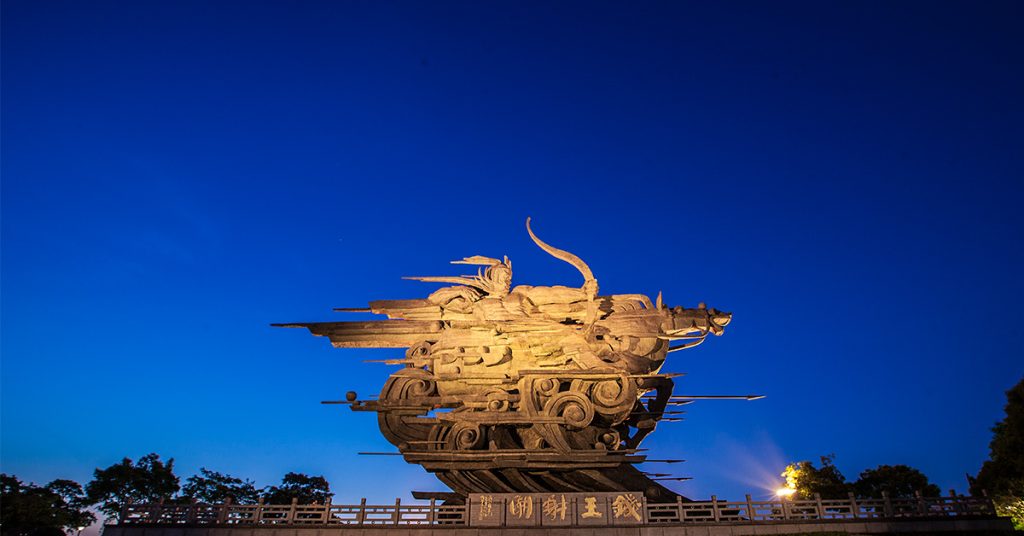
Lighting Effect: Mid-Range Uniform Illumination
Key Characteristics
• Suitable for medium distances (~10m typical spacing)
• Can illuminate façades up to ~30m height effectively
• Works well with asymmetric wall washers for uniform vertical lighting
Limitations
• Limited reach for very tall buildings
• May create flatter visual effects compared to grazing light
Position 3: Remote or Long-Distance Lighting (Neighboring Buildings / Far Positions)
Typical Products
• High-power floodlights
• Narrow-beam spotlights
• Long-throw LED projectors
Definition
Luminaires installed:
• On nearby buildings
• On elevated structures
• At significant distances from the façade
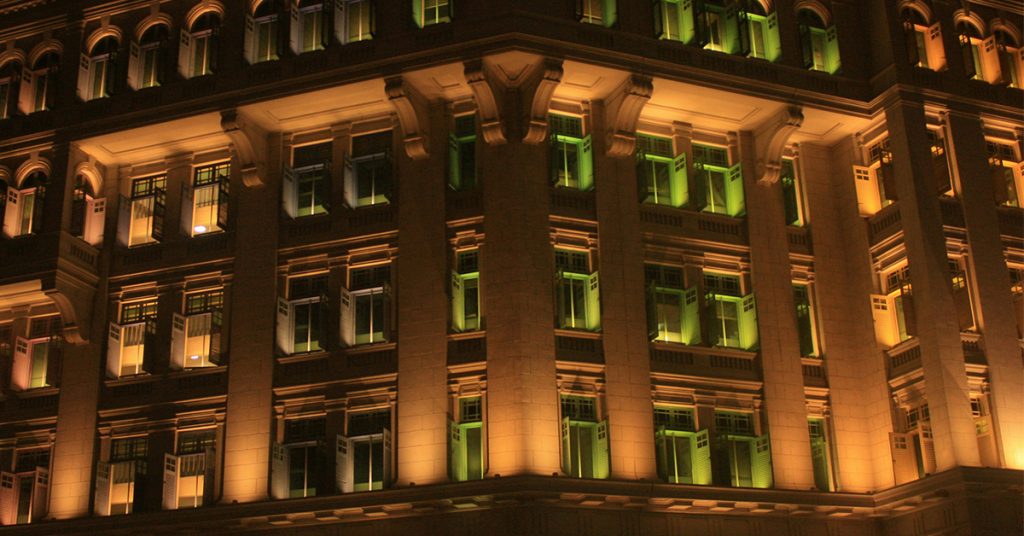
Lighting Effect: Full-Height Coverage
Key Characteristics
• Essential for very tall buildings and towers
• Requires very narrow beam angles for precision
• Enables controlled illumination of upper façade zones
Advantages
• Achieves uniform brightness across full height
• Reduces extreme shadow effects compared to grazing
• Allows precise targeting with minimal spill light
The Core Principle: Distance Defines Lighting Effect
This is the most important takeaway:
👉 The farther the luminaire is from the façade, the more uniform the lighting becomes.
👉 The closer it is, the stronger the texture and contrast.
This principle explains why:
• Close → dramatic, textured, high contrast (using products like linear inground uplighters)
• Medium → balanced, functional
• Far → smooth, uniform, scalable
Professional Strategy: Combine All Three Positions
In high-end projects, a single position is rarely sufficient. A professional solution from a trusted China manufacturer combines:
A professional solution combines:
• Low-mounted luminaires → emphasize texture and human-scale details
• Pole-mounted lighting → provide mid-level uniformity
• Remote lighting → illuminate upper architectural elements
This creates:
• Depth
• Hierarchy
• Visual balance
Design Guidelines for Outdoor Tall Building Lighting
• Use narrow beams for long distances to maintain intensity
• Increase distance for better uniformity on tall façades
• Control spill light to reduce environmental impact
• Combine different beam distributions (spot, flood, wallwash)
• Always match lighting strategy to architecture, not just height
Conclusion
In architectural lighting for tall buildings, the key is not just the luminaire—it is its position in space.
• Mounted on the building → detail and texture
• Mounted on poles → mid-range coverage
• Mounted at distance → full-height illumination
The most successful projects use a layered positioning strategy, transforming light into a tool that reveals architecture in three dimensions.
Why This Matters for Lighting Manufacturers
Understanding luminaire positioning allows manufacturers to:
• Recommend the correct optics (narrow, flood, wallwash)
• Provide realistic lighting solutions based on site constraints
• Support designers with application-driven product selection
This is what differentiates a product supplier from a professional architectural lighting partner.
As a professional architectural lighting partner, Daou Lighting helps you recommend the correct optics and provide realistic solutions based on site constraints.