
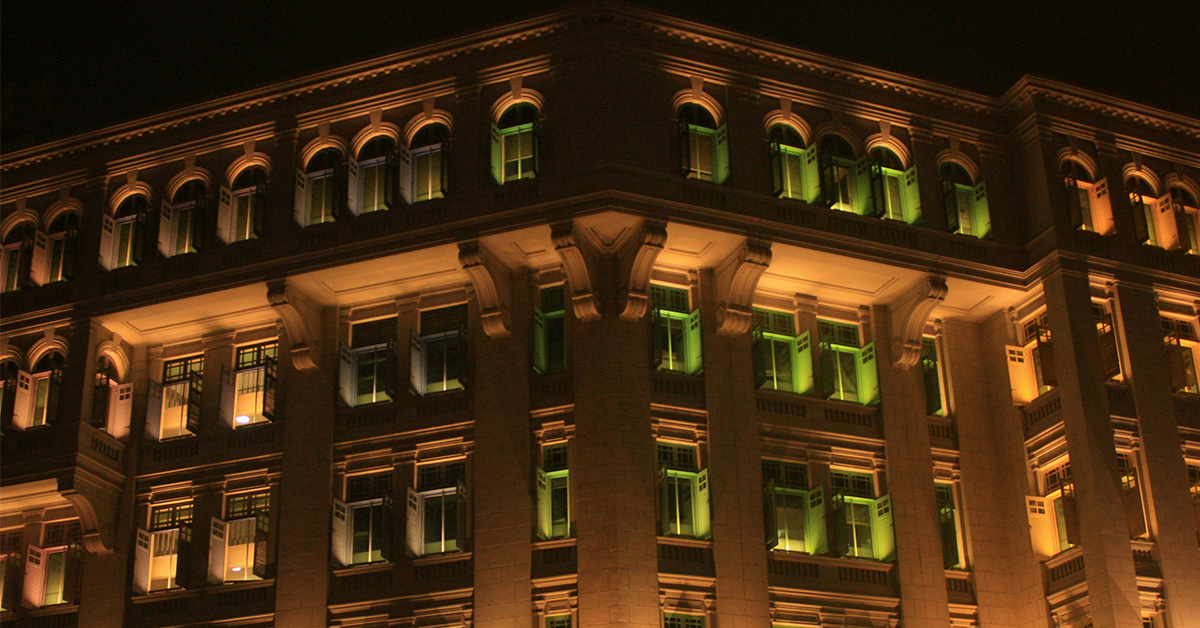
Understanding R9 and Its Impact on Outdoor Architectural Lighting | LED Lighting Guide
Understanding R9 and Its Impact on Outdoor Architectural Lighting
When selecting LED lighting for outdoor architectural projects, color rendering plays a crucial role in how a building appears at night. While the general Color Rendering Index (CRI, Ra) is commonly used to assess light quality, R9, the red color rendering index, is often overlooked. This article explains why R9 matters, its effect on different types of lighting products, and how it impacts the visual appeal of outdoor structures.
What is R9?
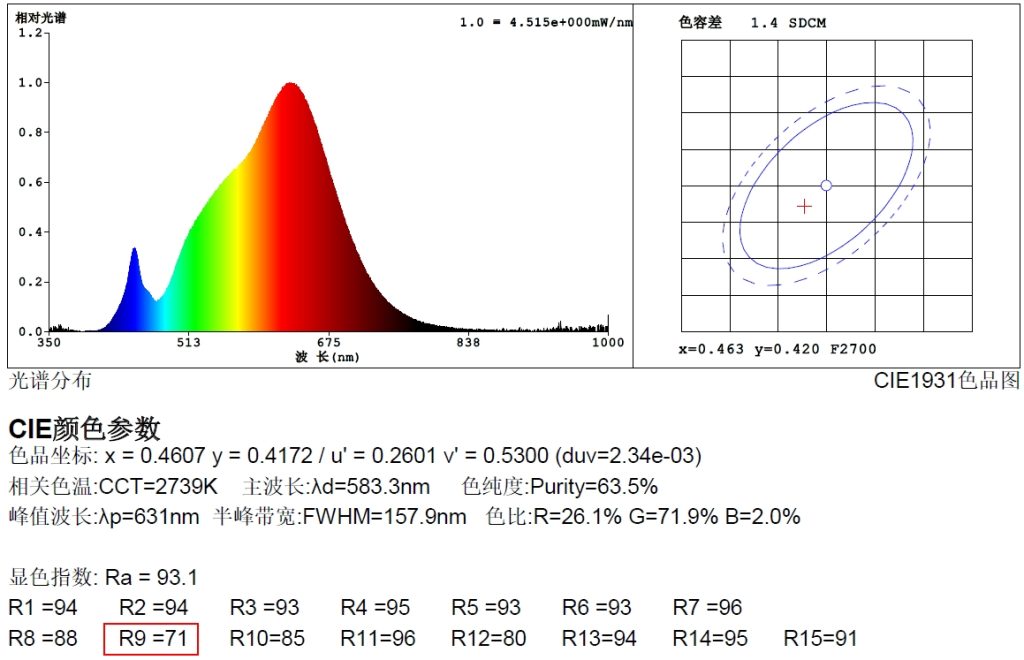
R9 is a metric that measures how accurately a light source renders saturated red colors—something standard CRI (Ra) does not cover. Red is essential for human perception because it affects:
• Skin tones under artificial lighting
• Brick, wood, and façade materials with red hues
• Red elements in landscaping or signage
High R9 values ensure that architectural elements appear vibrant, natural, and visually appealing.
How R9 Differs from General CRI (Ra)
| Index | Coverage | Typical LED Range | Notes |
|---|---|---|---|
| Ra (CRI) | Average of 8 pastel colors (R1–R8) | 80–90 | Good for general color rendering, ignores saturated red |
| R9 | Saturated red | 0–100 | Determines red reproduction, affects vividness and realism |
💡 Key point: High CRI does not guarantee high R9. Many CRI 80 LEDs have R9 around 10, while CRI 90 LEDs can achieve R9 70–80 depending on the LED manufacturer and light spectrum design.
R9 and Different Outdoor Lighting Products
R9 is relevant across a variety of outdoor architectural lighting fixtures, including:
• LED Floodlights: Illuminate large façades or building exteriors; high R9 improves red brick, stone, or metal trims.
• LED Projectors: Highlight architectural features or murals; high R9 ensures red details remain vivid.
• LED Wallwashers: Wash walls evenly with color-accurate light; high R9 enhances the depth and realism of red surfaces.
For outdoor architectural projects, R9 requirements depend on the application:
• General façade lighting or streetscapes: Moderate R9 (20–50) is sufficient.
• High-end projects, historical buildings, or colored materials: High R9 (≥70) is recommended.
Practical Example: R9 in Action
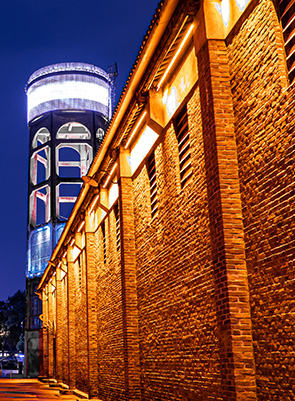
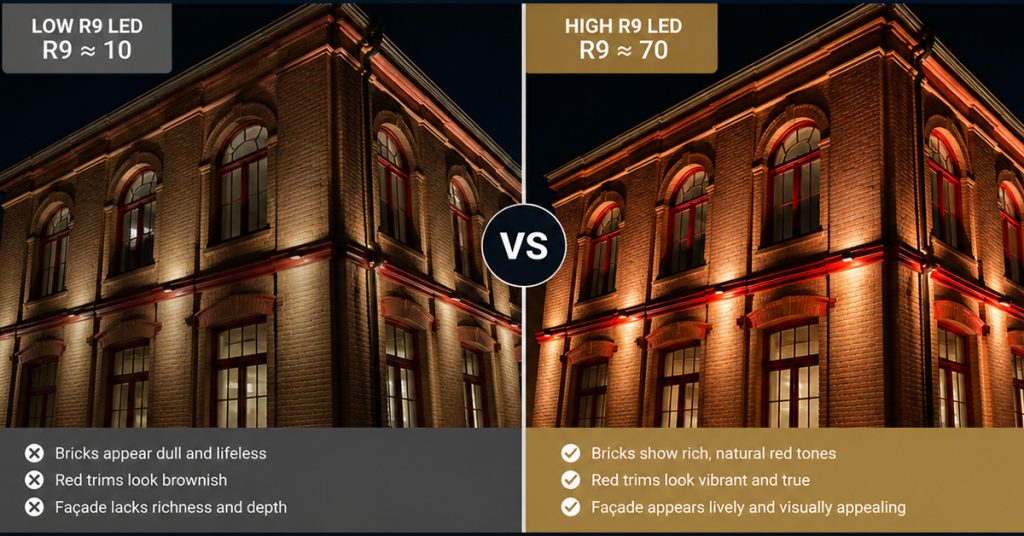
Consider a building with a brick façade and red metal trims:
• Low R9 LED (R9 ≈ 10): Bricks appear dull, red trims look brownish, façade loses richness.
• High R9 LED (R9 ≈ 70): Bricks and trims retain vibrant red hues, giving the façade a lively, true-to-life appearance.
Why R9 Matters for Outdoor Projects
Even though R9 is more critical for indoor lighting, museums, and high-end interiors, it can influence outdoor architectural lighting where:
• Materials with red tones are prominent
• Lighting designers want vibrant, high-quality color reproduction
• The project involves premium LED fixtures from reliable manufacturers
Using high R9 LEDs ensures that floodlights, projectors, and wallwashers enhance the true color of surfaces, making buildings visually striking at night.
Key Takeaways
• R9 measures red color accuracy, directly influencing how materials such as brick, metal, and landscaping appear under LED lighting.
• High R9 (≥70) is recommended for premium outdoor architectural projects to ensure vibrant and realistic colors.
• Leading manufacturers of LED floodlights, projectors, and wallwashers provide detailed Ra and R9 specifications for reliable color rendering.
• Always check both Ra and R9 when specifying outdoor lighting to achieve the desired visual impact and material fidelity.
Conclusion
In outdoor architectural lighting projects, understanding and prioritizing R9 can make a significant difference in the final visual effect. While Ra provides a general measure of color rendering, R9 ensures that red tones—critical in façades, trims, and landscaping—remain vivid and true-to-life. For architects, lighting designers, and project managers, selecting LED floodlights, projectors, and wallwashers from reputable manufacturers with high R9 values guarantees that every detail of the building’s materials and colors is faithfully represented at night.
Investing in lighting with high R9 not only enhances the aesthetic appeal of buildings but also demonstrates attention to quality and precision in design. Whether the project involves illuminating historic monuments, modern façades, or premium outdoor spaces, balancing brightness, efficiency, and accurate color rendering ensures a captivating and professional result. By considering both Ra and R9 in your specifications, you can achieve lighting that combines energy efficiency, durability, and visual excellence, making every outdoor architectural project truly stand out.